Curved Marble Nesting Table Design Methods: Strategies, Solutions, and Space-Saving Tips
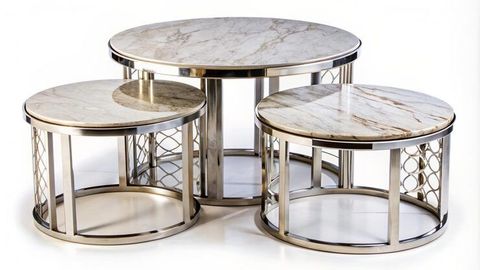
Curved marble nesting table design methods focus on creating compact, visually balanced furniture pieces that can be stacked or arranged together. These tables typically come in sets of two or three, each with a slightly different size, allowing them to “nest” under one another when not in use. The curved form, combined with marble surfaces, brings both structural efficiency and aesthetic appeal to modern interiors.
The concept of nesting tables has existed for decades, originally designed to address space limitations in smaller homes. Over time, materials and shapes have evolved. Marble became a popular choice due to its durability and natural patterns, while curved edges replaced sharp corners to improve safety and visual flow. Today, these tables are commonly seen in living rooms, lounges, and multifunctional spaces.
Curved marble nesting table design methods involve careful planning of dimensions, curvature radius, support structures, and surface finishing. These methods aim to balance form and function, ensuring that each table fits seamlessly with the others while maintaining stability and usability. The design process often considers factors such as weight distribution, ease of movement, and compatibility with different interior styles.
Importance
Curved marble nesting tables address several practical challenges in modern living environments. With urban homes often featuring limited floor space, furniture that adapts to different needs becomes essential. Nesting tables can be expanded when needed and compacted when not in use, helping to maintain an organized layout.
One key benefit is space efficiency. Instead of placing multiple separate tables around a room, nesting tables allow users to store them together. This reduces clutter and creates more open space for movement. The curved design further enhances usability by minimizing sharp edges, which can be especially useful in homes with children or high foot traffic.
Another important aspect is versatility. These tables can serve multiple purposes, such as holding beverages, displaying decorative items, or acting as temporary work surfaces. Their modular nature allows users to rearrange them based on specific needs.
Curved marble nesting table design methods also contribute to interior harmony. The natural veining of marble adds visual interest, while the curved shapes soften the overall look of a room. This combination makes them suitable for both contemporary and traditional settings.
In addition, these tables support flexible living arrangements. For example:
- In small apartments, they can function as primary and secondary tables without occupying excessive space
- In larger homes, they can be distributed across different areas and grouped when needed
- In shared spaces, they can be easily moved to accommodate gatherings or activities
Recent Updates
From 2024 to 2026, curved marble nesting table design methods have evolved in response to changing lifestyle patterns and design preferences. One noticeable trend is the increased focus on lightweight construction. While marble is naturally heavy, designers are combining thinner marble slabs with reinforced frames to reduce overall weight without compromising durability.
Another development is the integration of mixed materials. Marble is often paired with metals such as steel or aluminum, as well as engineered wood bases. This approach improves structural support and allows for more diverse design styles. Curved metal frames, in particular, have become more common due to their ability to complement the rounded marble tops.
Sustainability has also influenced design practices. There is a growing emphasis on using responsibly sourced marble and minimizing waste during production. Some manufacturers are incorporating recycled stone composites to achieve similar visual effects while reducing environmental impact.
Digital design tools have further refined curved marble nesting table design methods. Computer-aided design (CAD) and 3D modeling allow for precise curvature calculations and efficient prototyping. This helps ensure that each table in a nesting set aligns correctly and maintains consistent proportions.
Another emerging trend is customization. Users are showing interest in selecting specific marble patterns, finishes, and sizes to match their interior spaces. While not all designs are custom-made, modular configurations are becoming more adaptable to different room layouts.
Laws or Policies
Curved marble nesting table design methods are influenced by general furniture safety and material regulations rather than specific laws targeting this product category. In many countries, including India, furniture must comply with safety standards that address stability, structural integrity, and material handling.
One relevant area is product safety standards issued by organizations such as the Bureau of Indian Standards (BIS). These standards provide guidelines for furniture durability, load-bearing capacity, and resistance to tipping. Curved designs often align well with these requirements due to their reduced risk of sharp edge injuries.
Environmental regulations also play a role. The extraction and processing of marble are subject to environmental guidelines aimed at reducing ecological impact. These may include restrictions on quarrying practices, waste management, and emissions during manufacturing.
In addition, workplace safety regulations influence how curved marble nesting tables are produced. Handling heavy materials like marble requires adherence to safety protocols to prevent accidents during cutting, shaping, and transportation.
For imported furniture, customs regulations and quality certifications may apply. These ensure that materials meet safety and environmental standards before entering the market.
Tools and Resources
Several tools and resources support the planning and execution of curved marble nesting table design methods. These tools help designers, manufacturers, and even homeowners understand dimensions, layouts, and material behavior.
Digital design software is widely used for creating accurate models. Examples include CAD platforms that allow users to define curvature, thickness, and structural supports. These tools also help simulate how different table sizes will nest together.
Measurement and layout tools are equally important. These include:
- Room planning applications that help visualize table placement within a space
- Scale templates for determining appropriate table sizes
- Dimension calculators that ensure proportional relationships between nested tables
Material selection resources provide information about different types of marble, including their density, porosity, and color variations. Understanding these properties helps in choosing suitable slabs for specific uses.
Below is a simple table outlining key design factors and their purposes:
| Design Factor | Purpose in Nesting Tables |
|---|---|
| Curvature radius | Ensures smooth edges and consistent shape |
| Table height variation | Allows proper nesting without obstruction |
| Marble thickness | Balances durability and weight |
| Frame material | Provides structural support and stability |
| Surface finish | Affects appearance and ease of maintenance |
Prototyping tools, including 3D printing and mock-up models, are also used to test designs before final production. These methods help identify potential issues related to fit and stability.
FAQs
What are curved marble nesting table design methods?
Curved marble nesting table design methods refer to the techniques used to create sets of tables with rounded edges and marble surfaces that fit together in a stacked arrangement. These methods focus on achieving balance, stability, and efficient use of space.
Why are curved shapes used in marble nesting tables?
Curved shapes improve safety by reducing sharp edges and enhance the visual flow of a room. They also make it easier to arrange and reposition tables without creating rigid or bulky layouts.
How do nesting tables save space in small homes?
Nesting tables can be stacked together when not in use, reducing the amount of floor space they occupy. This makes them suitable for compact living areas where flexibility is important.
What materials are commonly combined with marble in these designs?
Marble is often paired with metal frames, engineered wood bases, or composite materials. These combinations help improve strength, reduce weight, and support different design styles.
Are curved marble nesting tables suitable for everyday use?
Yes, they are designed for regular use, such as holding items or serving as temporary surfaces. Proper design methods ensure that they remain stable and functional in daily settings.
Conclusion
Curved marble nesting table design methods bring together functionality, aesthetics, and efficient use of space. By combining rounded forms with durable materials, these tables address common challenges in modern interiors. Recent developments highlight improvements in lightweight construction, material combinations, and digital design tools. Understanding the principles behind these designs helps in appreciating how they fit into different living environments. Overall, they represent a practical approach to adaptable and space-conscious furniture.