Crane Rental: Types, Costs & How to Choose the Right Equipment
Crane rental supports lifting work across construction, manufacturing, and industrial projects.
Businesses may arrange a crane service to move heavy materials, install equipment, or position structural components. Understanding crane types, site requirements, and rental conditions helps project managers select suitable equipment for specific tasks.
Renting equipment can provide access to machinery without requiring long-term ownership. The right arrangement depends on the project's duration, load requirements, working environment, and available operators.
Understanding Crane Rental Services
Crane rental involves hiring lifting equipment for a defined period or project. Depending on the provider and agreement, the arrangement may include the crane, a qualified operator, transport, setup, and additional lifting support.
Common Reasons for Renting a Crane
Construction sites often use cranes to lift steel beams, concrete components, roofing materials, and other heavy items. Industrial facilities may need them to install machinery, relocate production equipment, or carry out maintenance work.
Other applications include:
Infrastructure projects: Positioning materials for bridges, roads, and public facilities.
Building construction: Moving structural components to elevated work areas.
Industrial operations: Installing or relocating large equipment.
Warehouse projects: Handling heavy materials where suitable lifting access is available.
Maintenance work: Removing or positioning machinery during facility upgrades.
The equipment and lifting method should match the task. A crane suitable for a construction site may not be appropriate for a restricted industrial location.
Rental Arrangements
Some providers offer equipment-only rental, while others supply a crane with an operator and lifting crew. The agreement should clearly identify who is responsible for transport, setup, inspection, operation, and site coordination.
Project managers should confirm the rental period, minimum booking duration, overtime terms, and cancellation conditions before arranging equipment.
Types of Cranes Available for Rental
Different cranes are designed for different lifting environments. Their reach, mobility, lifting capacity, and setup requirements influence where they can be used.
Mobile Crane Rental
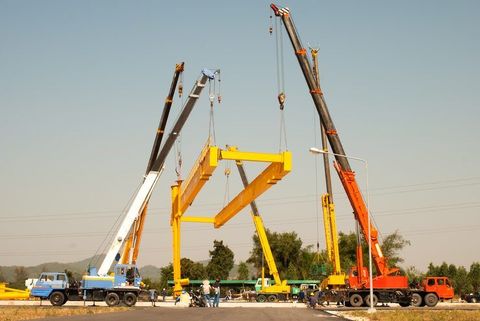
Mobile crane rental is commonly considered for projects that require equipment to move between locations or operate at different points on a site. Mobile cranes are mounted on wheeled or tracked carriers, depending on their design.
Some types include all-terrain cranes, rough-terrain cranes, truck-mounted cranes, and crawler cranes. Each has different operating characteristics.
Mobile cranes may be useful for construction work, equipment installation, and temporary lifting operations. However, access roads, ground conditions, setup space, and the required lifting radius must be assessed before use.
Tower Crane Rental
Tower crane rental is commonly associated with large construction projects involving tall buildings or repeated lifting over an extended period. These cranes are generally installed at a fixed location and can lift materials across a broad working area.
Tower cranes may be configured with different mast heights, jib lengths, and lifting capacities. Their installation requires planning, suitable foundations or support arrangements, and coordination with the construction schedule.
They are not usually the practical choice for short, one-time lifting tasks because installation and dismantling involve additional work.
Other Crane Types
Depending on the project, rental providers may also offer crawler cranes, carry deck cranes, and loader cranes. Crawler cranes travel on tracks and can be suitable for certain heavy lifting operations on prepared ground.
Carry deck cranes are compact machines designed for some lifting tasks in restricted spaces. Loader cranes are commonly mounted on trucks and can support loading and unloading work.
Choosing the Right Crane for a Project
Selecting equipment involves more than comparing maximum lifting capacities. The crane must be suitable for the actual load, working distance, lifting height, and site environment.
Evaluate Load and Lifting Requirements
First, identify the weight and dimensions of the item being lifted. Include lifting accessories such as slings, hooks, spreader beams, and other rigging equipment when calculating the total load.
The lifting radius is also important. A crane's capacity can change depending on how far the load is positioned from the machine, the boom configuration, and the operating conditions.
Review Site Conditions
Before booking, assess the working area and access route. Important factors include:
Available space for crane positioning and setup.
Ground strength, level, and stability.
Overhead power lines and nearby structures.
Traffic movement and pedestrian access.
Weather conditions and possible wind exposure.
Space needed for lifting and placing the load.
A site assessment helps identify restrictions before equipment arrives. If conditions are unsuitable, the lifting plan may need to change.
Crane Rental and Machinery Moving
Heavy machinery relocation often requires more than a crane alone. Machinery movers may coordinate lifting, rigging, transport, positioning, and installation as part of a larger operation.
Planning Machinery Relocation
Before moving equipment, teams should review its weight, dimensions, centre of gravity, lifting points, and destination layout. Manufacturer instructions and available technical drawings can provide important information.
The route should also be checked for floor capacity, door dimensions, overhead clearance, and obstacles. For complex moves, engineering assessments may be necessary to determine suitable lifting and transport arrangements.
Coordinating the Work
Crane operators, riggers, site supervisors, and machinery-moving teams need clear responsibilities. Communication is particularly important when several workers are involved in positioning a heavy load.
A documented lifting plan can outline the equipment, lifting sequence, communication methods, exclusion zones, and emergency arrangements.
Comparing Crane Rental Requirements
The following table provides a general comparison of common crane options. Actual suitability depends on the model and project conditions.
| Crane type | Common application | Main consideration |
|---|---|---|
| Truck-mounted crane | General lifting and transport-related work | Road access and setup space |
| All-terrain crane | Projects across varied site conditions | Ground assessment and configuration |
| Rough-terrain crane | Certain uneven construction sites | Suitable operating surface |
| Crawler crane | Heavy lifting and larger projects | Transport and setup requirements |
| Tower crane | Multi-storey construction | Installation and foundation planning |
Safety and Cost Considerations
Crane operations involve significant risks if equipment, loads, or site conditions are not properly managed. Planning and qualified personnel are essential parts of a responsible lifting process.
Safety Responsibilities
The crane should be inspected and operated according to applicable regulations and manufacturer instructions. Operators and rigging personnel should have appropriate training and qualifications for their assigned tasks.
Safety planning commonly includes checking lifting accessories, establishing exclusion zones, monitoring weather, and using agreed communication signals. No person should stand or work beneath a suspended load.
Understanding Rental Costs
Crane rental prices vary according to equipment type, capacity, location, rental duration, transport, operator requirements, and setup complexity. Additional charges may apply for overtime, permits, mobilisation, or special lifting arrangements.
When comparing quotations, review the complete cost rather than the hourly or daily rate alone. Confirm what is included, what is charged separately, and who is responsible for delays caused by site readiness or weather.
Frequently Asked Questions
How do I find crane rental near me?
Search for local providers and compare equipment availability, service areas, qualifications, insurance, and rental conditions. Confirm that the provider can meet the project's lifting requirements.
What is the difference between mobile crane rental and tower crane rental?
Mobile cranes can generally move between locations, while tower cranes are installed at fixed positions for ongoing lifting work. Project duration and site conditions influence the choice.
Does a crane service include an operator?
Some rental agreements include an operator, while others provide equipment separately. Confirm the operator arrangement and responsibilities before signing the agreement.
Do machinery movers need a crane?
Not every machinery move requires a crane. The method depends on equipment weight, access, floor conditions, lifting points, and the relocation route.
Conclusion
Crane rental provides access to lifting equipment for construction, industrial, and machinery-moving projects. Choosing suitable equipment requires an assessment of load requirements, site conditions, rental terms, and safety arrangements. Clear planning and coordination help projects organise lifting work responsibly and efficiently.