Industrial Bearings: Types, Mechanics & How They Reduce Friction
In the world of machinery and mechanical operations, industrial bearings are essential components that enable efficient movement by supporting the rotation and reducing friction between moving parts.
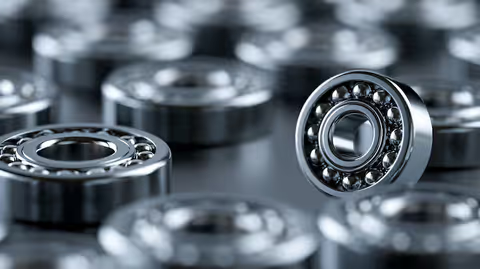
This article endeavors to explore the various aspects of industrial bearings, detailing their types, structures, functions, and the critical role they play in reducing friction. Even in the age of high technology, the basic principles of bearings remain a cornerstone of mechanical operations across multiple industries. At its core, a bearing is designed to allow constrained motion, enabling one part of a machine to move effortlessly relative to another. By providing surfaces that slide against each other with minimal resistance, bearings not only facilitate movement but also improve efficiency and durability of the machinery. The basic concept behind their functionality is to diminish the direct contact between two rotating components, a factor crucial in reducing wear and preventing the dissipation of energy in the form of heat. Understanding the ways in which bearings achieve this can provide insights into their predominant role in various sectors, from automotive to aerospace. There are several types of bearings, each suited to specific applications and types of motion. The most common types include ball bearings, roller bearings, needle bearings, and thrust bearings. Ball bearings, perhaps the most ubiquitous, use spherical rolling elements to provide smooth motion and support radial and axial loads. Roller bearings, in contrast, use cylindrical rollers that enhance load capacity and mitigate rotational friction. Similarly, needle bearings, with their slender rollers, are adept at handling heavy loads in compact spaces, while thrust bearings are designed to handle axial loads effectively. A vital aspect of industrial bearings is their structural design, which contributes significantly to their functionality. A typical bearing consists of inner and outer races or rings, which contain the rolling elements and a cage that keeps these elements evenly spaced. The inner ring rotates along with the shaft, while the outer ring remains static, helping maintain the alignment and spacing of the elements. The cage or retainer prevents the rolling elements from colliding with one another, minimizing friction and facilitating smooth movement. The materials used in bearings are integral to their performance and longevity. Typically, bearings are made from high-grade steel alloys, commonly known as bearing steel, valued for its strength, wear resistance, and ability to endure extreme conditions. Additionally, some bearings are crafted from ceramic or hybrid materials, which offer advantages such as lower density, higher hardness, and superior resistance to heat and corrosion. These material considerations are crucial when designing bearings for specialized applications, such as in high-temperature or corrosive environments. Lubrication plays an indispensable role in the operation of bearings. Effective lubrication reduces friction between the contact surfaces, prevents wear, and protects the surfaces from corrosion. Greases and oils are the most utilized lubricants, chosen based on the bearing type, operating environment, and specific application needs. Regular lubrication does not just smooth motion, but it also dissipates heat and flushes contaminants that could compromise the bearing's function. Modern advancements have led to the development of synthetic lubricants and solid lubricants that enhance bearing performance under extreme conditions. Bearings are at the heart of numerous mechanical processes and can be found in applications ranging from small household appliances to large industrial machines. In the automotive industry, bearings are pivotal in the smooth function of engines, wheels, and transmission systems. In industrial machinery, they ensure the efficient operation of motors, pumps, and conveyors. In the sphere of aerospace, bearings are key in providing the precision necessary for aircraft navigation and control systems. This versatility across applications underscores their role in engineering efficiency and innovation. A critical factor in the utility of bearings is their ability to handle different types of load: radial, axial, or a combination of both. Selecting the appropriate bearing involves understanding the direction and magnitude of these loads, the operational speeds, required precision, and environmental conditions. For instance, a high-speed application may require precision-engineered ball bearings, while a system operating in a harsh chemical environment might need bearings made from corrosion-resistant materials. Bearings are also engineered for their endurance and precision, vital traits that contribute to the reliability and longevity of mechanical systems. High-precision bearings are manufactured with exacting standards to ensure minimal deviation and optimal performance. This precision becomes essential in applications where even slight inaccuracies could lead to significant inefficiencies or failures, such as in medical equipment or aerospace technology. Advancements in technology have introduced innovations in bearing designs and materials, optimizing their performance and extending their lifespans. These advancements include self-lubricating bearings that eliminate the need for regular maintenance, magnetic bearings that offer near frictionless operations, and smart bearings embedded with sensors that provide real-time data on performance metrics. Such innovations are paving the way for more sophisticated machinery, enhancing their efficiency and reducing downtime, thus contributing to the overall productivity in various industries. The significance of industrial bearings is also reflected in their contribution to energy efficiency, particularly as industries strive to reduce operational costs and environmental impact. By diminishing friction, bearings reduce energy consumption, a crucial consideration in industries operating with heavy machinery over prolonged periods. In energy-intensive sectors such as manufacturing and transportation, the efficiency gains from high-quality bearings can translate into substantial cost savings and reduced carbon footprint. Moreover, the design and maintenance of bearings can have significant implications for safety and reliability. Faulty or poorly maintained bearings can lead to mechanical failures, posing risks not only to equipment but also to personnel and productivity. For this reason, regular inspection and maintenance are critical. Identifying wear patterns, maintaining proper lubrication schedules, and utilizing diagnostics can greatly enhance bearing performance and prevent costly downtimes. In summary, industrial bearings are foundational elements in the mechanical world, reducing friction and enabling the seamless operation of complex machinery. By understanding their types, structures, functions, and maintenance requirements, one can appreciate their profound impact on efficiency and innovation. As technology advances, the evolution of bearing designs and materials will continue to drive progress across industries, highlighting their timeless relevance in engineering and manufacturing.