Manufacturing Machinery Knowledge: Guide to Modern Production Equipment
Production equipment refers to the machines, tools, control systems, and supporting units used to transform raw materials into finished or partially finished products.
Manufacturing production equipment can range from basic cutting and forming machines to computer-controlled systems that coordinate several production stages.
Modern production machinery developed from mechanical equipment used during the Industrial Revolution. Early factories depended heavily on manual operation, while later developments introduced electric motors, hydraulic systems, programmable controls, robotics, sensors, and computer-based monitoring. These technologies gradually changed how industrial manufacturing equipment is designed and operated.
Today, production equipment is found across many industries, including automotive manufacturing, electronics, food processing, plastics, chemicals, textiles, pharmaceuticals, packaging, metalworking, and consumer products. Each industry uses different machinery according to its materials, production methods, quality requirements, and operating conditions.
Main Components of Production Systems
A production system normally contains several connected elements rather than one machine. Industrial production machinery may include material-feeding equipment, processing machines, conveyors, inspection units, control panels, packaging equipment, and data-monitoring systems.
Automated production equipment adds sensors, programmable controllers, robotic mechanisms, machine-vision systems, and software to coordinate repetitive activities. These components can communicate with one another so that production stages follow defined sequences.
A typical production system may contain:
- Material handling equipment for moving raw materials between stages
- Processing machinery for cutting, forming, mixing, heating, cooling, or assembling
- Control equipment for managing machine operations
- Inspection equipment for checking dimensions, appearance, or process conditions
- Conveyors and transfer systems for movement between workstations
- Safety equipment such as guards, emergency stops, and protective sensors
- Data systems for recording operating information
Importance
Why Production Equipment Matters
Manufacturing equipment affects how products are processed, assembled, inspected, and packaged. Appropriate machinery can help manufacturers maintain repeatable production conditions while reducing dependence on manual handling for repetitive operations.
Industrial production equipment is also important when manufacturing involves heat, pressure, chemicals, heavy materials, or fast-moving components. Machines can be designed to perform specific tasks within controlled operating ranges, while safety systems help limit exposure to hazardous conditions.
Production equipment also influences product consistency. When a machine repeatedly follows programmed parameters, factors such as speed, temperature, pressure, position, and material flow can be monitored more systematically.
Applications Across Industries
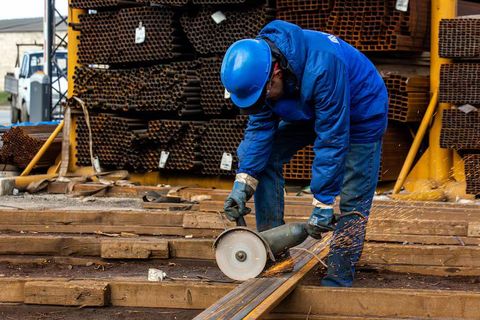
Different industries require different forms of manufacturing production equipment. For example, metalworking facilities may use presses, lathes, milling machines, cutting systems, and welding equipment. Plastic manufacturing can involve extruders, injection molding machines, cooling systems, and material handling units.
Electronics production uses equipment for circuit-board assembly, component placement, soldering, inspection, and testing. Food processing facilities may use mixers, filling machines, ovens, refrigeration systems, conveyors, and packaging equipment.
The following table illustrates common equipment categories:
| Equipment Category | Typical Function | Common Industries |
|---|---|---|
| CNC machinery | Cutting and machining materials | Metal, automotive, aerospace |
| Injection molding equipment | Forming plastic components | Plastics, consumer products |
| Industrial robots | Handling, assembly, or welding | Automotive, electronics |
| Conveyors | Moving materials or products | Packaging, logistics, manufacturing |
| Mixing equipment | Combining materials | Chemicals, food, construction |
| Packaging machinery | Filling, sealing, and labeling | Food, consumer goods |
| Inspection systems | Checking product characteristics | Electronics, automotive, packaging |
Effects on Workers and Operations
Industrial manufacturing equipment changes the type of work performed inside a factory. Manual activities may shift toward machine setup, monitoring, programming, inspection, maintenance, and process management.
This also creates a need for technical knowledge. Operators may need to understand machine interfaces, safety procedures, production parameters, and basic troubleshooting. Maintenance teams may work with mechanical, electrical, pneumatic, hydraulic, and software-based systems.
Recent Updates
Automation and Connected Machinery
Recent developments in production technology have focused on greater automation and connectivity. Automated production equipment increasingly incorporates sensors that measure operating conditions such as temperature, vibration, pressure, speed, and energy consumption.
Industrial production systems can connect these measurements to supervisory software. This allows production personnel to examine machine conditions and identify changes in operating patterns.
Industrial Internet of Things technology has also expanded the use of connected sensors. Machines can transmit operational information to centralized platforms, allowing data from different production stages to be viewed together.
Artificial Intelligence and Machine Vision
Artificial intelligence is increasingly being studied and applied in manufacturing environments. One area involves machine vision, where cameras and computer algorithms examine products for visible characteristics such as shape, surface conditions, alignment, or assembly position.
AI-based systems can also analyze historical machine data to identify unusual patterns. Such systems do not eliminate the need for engineering judgment because production environments can contain changing materials, equipment conditions, and operating variables.
Energy and Resource Management
Energy efficiency has become another important area of machinery development. Manufacturers are examining motor systems, variable-speed drives, heat recovery, compressed-air systems, and machine operating cycles to understand energy use.
Modern control systems can record energy consumption alongside production data. This helps organizations examine how equipment operation relates to electricity, fuel, water, and material usage.
Flexible Manufacturing
Manufacturing environments are also becoming more adaptable. Production equipment may be configured to handle different product sizes, materials, or production sequences rather than being dedicated to only one output.
Modular machinery, programmable controls, robotic handling, and digital production planning support this approach. However, flexibility depends on machine design, tooling, software configuration, and the characteristics of the materials being processed.
Laws or Policies
Machinery Safety
Manufacturing equipment is subject to safety requirements that vary by country and industry. These rules commonly address machine guarding, emergency stopping systems, electrical safety, operator protection, workplace conditions, and equipment inspection.
In India, industrial workplaces are influenced by occupational safety requirements under the Occupational Safety, Health and Working Conditions Code, 2020, along with applicable rules and sector-specific requirements. Actual obligations can depend on the type of facility, machinery, workplace, and applicable state-level provisions.
Electrical and Environmental Requirements
Electrical equipment may need to follow applicable national standards and technical requirements. Machinery using motors, control panels, heating systems, or other electrical components may require appropriate protection against electrical hazards.
Environmental regulations can also affect manufacturing facilities. Depending on the industry, requirements may address emissions, wastewater, hazardous materials, waste handling, noise, and resource consumption.
Equipment Documentation
Manufacturing machinery is normally accompanied by technical documentation covering operating instructions, maintenance procedures, specifications, safety information, and component details. Documentation helps operators and maintenance personnel understand the intended operating conditions of equipment.
Organizations working with industrial manufacturing equipment may also maintain inspection records, maintenance logs, training records, and equipment-related risk assessments.
Tools and Resources
Engineering and Design Tools
Computer-aided design software is widely used to create machine components, production layouts, and equipment assemblies. Simulation software can also help engineers examine mechanical movement, thermal behavior, fluid flow, or production sequences before physical equipment is constructed.
Manufacturing teams may use programmable logic controller software for machine control, while human-machine interfaces provide operators with information about machine status and production parameters.
Planning and Monitoring Resources
Production planning platforms can organize manufacturing schedules, material requirements, machine availability, and production information. Manufacturing execution systems can connect production-floor activities with broader manufacturing records.
Useful resources include:
- Industrial equipment manuals and technical documentation
- Engineering standards and machinery safety references
- CAD and manufacturing simulation platforms
- PLC and automation programming environments
- Machine-monitoring and data-collection systems
- Preventive maintenance templates
- Production planning and equipment inspection records
Production equipment manufacturers and production equipment suppliers commonly provide technical specifications, operating documentation, equipment drawings, and application information. These materials can help users understand machinery characteristics before integrating equipment into a production environment.
FAQs
What is production equipment?
Production equipment includes machines and supporting systems used to process materials, assemble products, inspect outputs, and move materials through a manufacturing facility. It can range from manually operated machines to highly automated production systems.
What is the difference between production machinery and industrial manufacturing equipment?
Production machinery generally refers to machines performing specific manufacturing tasks. Industrial manufacturing equipment is a broader term that can include processing machines, conveyors, inspection systems, control equipment, material-handling units, and other factory infrastructure.
How does automated production equipment work?
Automated production equipment uses controllers, sensors, actuators, software, and mechanical systems to perform defined operations with limited manual intervention. The exact arrangement depends on the manufacturing process and equipment design.
What should production equipment suppliers provide?
Production equipment suppliers may provide technical specifications, machine drawings, operating instructions, maintenance information, safety documentation, and integration details. The exact documentation depends on the type and complexity of the equipment.
What are turnkey automated production systems?
Turnkey automated production systems are integrated manufacturing arrangements in which multiple machines, controls, material-handling units, and related components are designed to operate as a coordinated production system. Their configuration depends on the required process and factory layout.
Conclusion
Modern production equipment combines mechanical systems, electrical controls, automation, sensors, software, and safety technologies to support industrial manufacturing. Production machinery varies considerably according to the materials, processes, product requirements, and operating environment involved. Recent developments have emphasized connected equipment, machine vision, data analysis, flexible automation, and energy monitoring. Understanding these technologies provides a foundation for examining how modern industrial production systems are designed and operated.